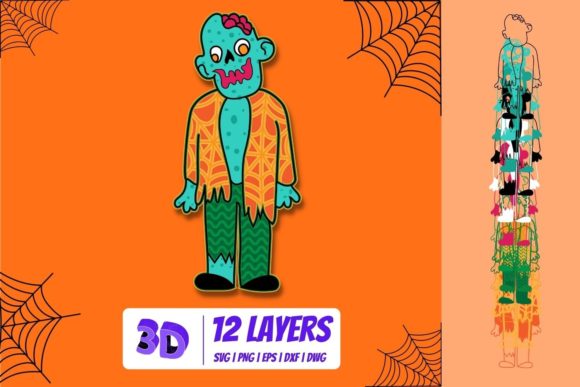
3D Zombie SVG: A Creative Tool for Digital Artists and Web Developers
For digital artists, web developers, and designers, 3D Zombie SVG has become a valuable asset in creating engaging visual content. This unique format combines the precision of vector graphics with the dynamic appeal of 3D modeling, allowing creators to bring lifelike zombie characters into their projects with ease. Whether you're working on a game, a website, or a multimedia presentation, 3D Zombie SVG offers a versatile solution that enhances both functionality and aesthetics.
Understanding 3D Zombie SVG
3D Zombie SVG refers to scalable vector graphics that depict three-dimensional zombie figures. Unlike traditional 2D images, these SVGs maintain clarity at any size, making them ideal for use across various platforms and devices. The integration of 3D elements allows for more depth and realism, which can be particularly effective in animations, interactive media, and virtual environments.
The key advantage of 3D Zombie SVG is its adaptability. These graphics can be easily modified, resized, and integrated into different design frameworks without losing quality. This makes them a preferred choice for professionals who require flexibility in their creative workflows.
Key Features of 3D Zombie SVG
Several characteristics define the effectiveness of 3D Zombie SVG in modern design practices. One of the most notable features is scalability. Because SVG files are based on mathematical formulas rather than pixel data, they can be enlarged or reduced without distortion. This ensures that your zombie characters look sharp and professional, whether displayed on a mobile screen or a large billboard.
Another important feature is interactivity. Many 3D Zombie SVGs can be animated using CSS or JavaScript, enabling developers to create dynamic effects such as movement, transformation, and interaction. This opens up new possibilities for user engagement, especially in web-based applications and games.
Additionally, 3D Zombie SVG supports transparency and layering, which allows for more complex visual compositions. You can overlay multiple elements, adjust opacity, and create realistic lighting effects, all while maintaining the integrity of the original design.
Applications of 3D Zombie SVG in Modern Workflows
3D Zombie SVG has found its way into numerous industries, from entertainment to education. In the gaming sector, these graphics are used to create detailed character models that enhance the immersive experience. Game developers can integrate 3D Zombie SVG into their projects to add realistic enemies or background elements without compromising performance.
In web development, 3D Zombie SVG is often used to create eye-catching visuals for websites, landing pages, and social media content. Their lightweight nature ensures fast loading times, which is crucial for user retention and search engine optimization. By incorporating 3D Zombie SVG into your site, you can attract attention and improve overall engagement.
Education and training programs also benefit from the use of 3D Zombie SVG. For example, in medical or safety training simulations, these graphics can represent hazardous scenarios in a controlled environment. This helps learners understand potential risks and develop appropriate responses without real-world consequences.
Practical Benefits of Using 3D Zombie SVG
One of the main benefits of 3D Zombie SVG is its cost-effectiveness. Traditional 3D modeling software can be expensive and require specialized skills, but many 3D Zombie SVG resources are available for free or at a low cost. This makes it accessible to a wide range of users, including independent artists and small businesses.
Another practical advantage is the ease of customization. With 3D Zombie SVG, you can modify colors, textures, and shapes to match your specific needs. This level of control allows for greater creativity and ensures that your designs align with your brand identity or project goals.
Moreover, 3D Zombie SVG promotes cross-platform compatibility. These files can be used in a variety of design tools, including Adobe Illustrator, Figma, and online editors. This flexibility enables seamless collaboration between team members and reduces the need for file conversions or additional software.
Considerations When Choosing 3D Zombie SVG
Before adopting 3D Zombie SVG, it's essential to consider several factors. First, ensure that the source of your SVG files is reliable and provides high-quality assets. Poorly designed or outdated files may not meet your expectations and could lead to technical issues down the line.
Second, evaluate the licensing terms. Some 3D Zombie SVG resources are available under open-source licenses, while others may require attribution or payment. Understanding these restrictions will help you avoid legal complications and ensure compliance with copyright laws.
Finally, test the SVG files in your intended environment. While 3D Zombie SVG is generally compatible with most platforms, certain features may behave differently depending on the browser or application. Conducting thorough testing can help identify and resolve any potential problems before deployment.
Best Practices for Working with 3D Zombie SVG
To maximize the effectiveness of 3D Zombie SVG, follow some best practices. Start by organizing your files and keeping them well-documented. This makes it easier to locate and reuse assets in future projects.
Additionally, optimize your SVGs for performance. Remove unnecessary elements, simplify complex paths, and compress the file size where possible. This ensures that your graphics load quickly and function smoothly across different devices.
Lastly, stay updated with the latest trends and tools in 3D Zombie SVG design. New software and techniques are constantly emerging, and staying informed can help you leverage the full potential of this powerful format.