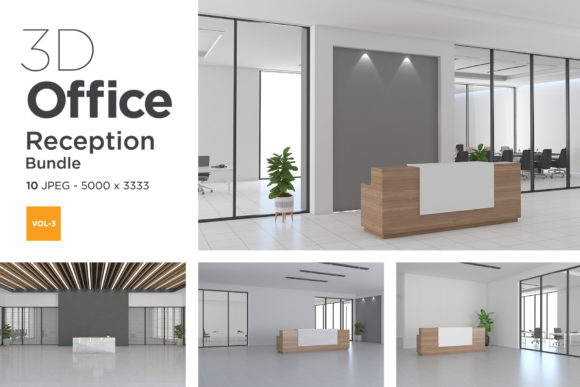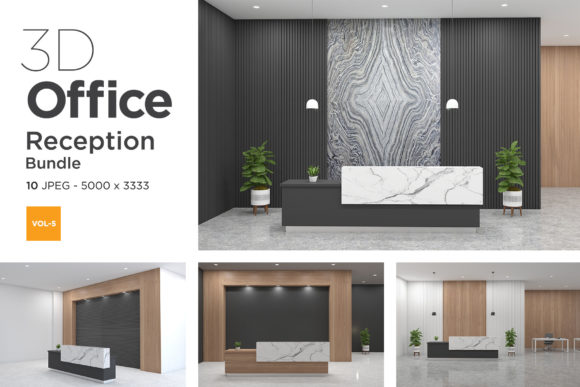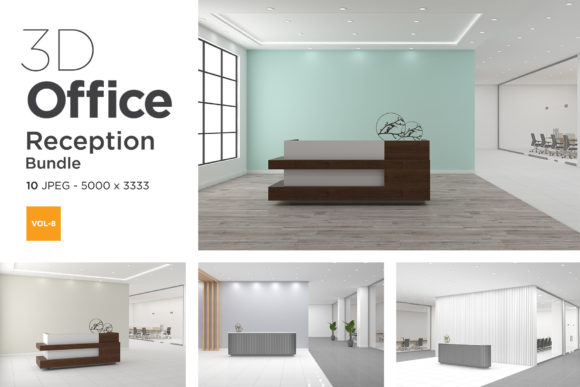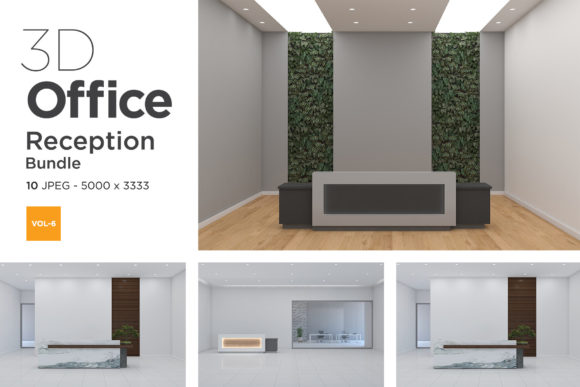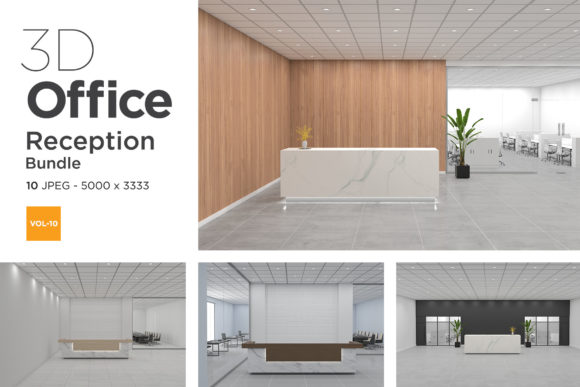
3D Office Reception Mockup Vol 10: Elevating First Impressions with Precision Design
First impressions in business environments are rarely accidental. They are orchestrated through deliberate choices in spatial layout, material finishes, lighting, and furniture placement. The reception area, as the literal and figurative front door of any company, carries an outsized burden in communicating brand identity, professionalism, and culture. For designers and visualization specialists, presenting these spaces convincingly to clients or stakeholders requires tools that bridge the gap between concept and reality. 3D Office Reception Mockup Vol 10 has emerged as a compelling asset in this space, offering a refined balance between flexibility and realism. This article unpacks what makes this particular volume stand out, how it functions within modern workflows, and what practical considerations matter most when integrating it into your projects.
What Defines a High-Quality Reception Mockup
Not all mockups deliver the same level of utility. A generic, low-resolution file might save time in the short run, but it rarely persuades a discerning client or survives scrutiny in a portfolio. 3D Office Reception Mockup Vol 10 addresses this by providing a carefully constructed environment that feels both aspirational and inhabitable. The geometry is clean, the lighting setup is nuanced, and the material definitions allow for meaningful customization. Whether you are pitching a corporate headquarters, a creative agency lobby, or a medical office waiting area, the underlying structure of this mockup supports a wide range of brand aesthetics.
One of the defining characteristics of this volume is how it handles scale. Reception areas can vary dramatically in square footage, ceiling height, and architectural detailing. The mockup avoids the trap of being too generic by offering a modular layout that can be adapted without breaking the illusion of a real physical space. The sightlines are carefully composed to draw attention to key focal points, such as the reception desk, the logo wall, and the seating arrangement, while still allowing peripheral context to feel natural rather than cluttered.
Key Functional Qualities and Design Characteristics
When evaluating any 3D mockup for professional use, several qualities determine whether it will serve as a timesaver or a source of frustration. 3D Office Reception Mockup Vol 10 scores well across the most critical dimensions:
- Layer organization and naming conventions — Clean, intuitive layer structures reduce friction when swapping materials, hiding elements, or adjusting camera angles. This volume groups objects logically, with separate folders for structural elements, furniture, lighting fixtures, and decorative objects.
- Material resolution and texture fidelity — The textures included are sharp and exhibit realistic surface behavior, from brushed metal reflections to fabric weave patterns. This level of detail becomes especially important when rendering close-up detail shots for client presentations.
- Lighting rig flexibility — Rather than relying on a single baked lighting setup, the mockup incorporates adjustable lighting that can simulate different times of day or mood settings. This is a practical boon when presenting options to clients who may prefer a bright, energetic environment versus a subdued, premium atmosphere.
- Geometry cleanliness — There are no stray polygons, floating objects, or hidden artifacts that could cause render errors or slow down scene manipulation. This speaks to the care taken during the modeling phase.
These qualities directly affect how efficiently you can iterate on a design. Instead of spending hours rebuilding a reception environment from scratch, you can focus on the elements that matter most—brand colors, signage placement, furniture selection, and material combinations—while the mockup provides a trustworthy foundation.
How It Fits Into Modern Design and Visualization Workflows
Working as a freelance designer, part of an in-house creative team, or as an architect presenting to clients, the tools you choose must integrate smoothly with your existing pipeline. 3D Office Reception Mockup Vol 10 is compatible with major 3D software environments, which means you can import it directly into your scene without needing to rewire materials or rebuild lighting from scratch. This compatibility reduces the friction between ideation and visualization.
In a typical project workflow, you might begin with mood boards and conceptual sketches that define the overall direction. The next step often involves blocking out spatial layouts in a 3D environment. Here, the mockup serves as a rapid prototyping tool. You can place it into your scene, adjust the camera to match your intended perspective, and begin swapping materials to test color palettes, wood tones, metal finishes, and upholstery options. Because the lighting is already configured to flatter the space, you get immediate visual feedback that would otherwise take hours to set up manually.
Another scenario where this mockup proves valuable is during client revisions. When a client requests to see the reception area with a different flooring material or a redesigned logo wall, you can make those changes in minutes rather than days. The mockup's structure supports iterative changes without degrading the overall realism. This agility often makes the difference between a project that stalls and one that moves forward decisively.
Practical Benefits for Designers and Businesses Alike
The benefits of using a high-quality reception mockup extend beyond the designer's immediate workflow. For businesses investing in a physical space, seeing a realistic visualization before construction begins reduces uncertainty and aligns stakeholder expectations. 3D Office Reception Mockup Vol 10 enables this alignment by presenting a polished yet customizable vision of what the final environment could look like.
For designers, the practical advantages are tangible:
- Shortened presentation prep time — Instead of building a reception scene from scratch for every new proposal, you have a reliable starting point that already looks professional.
- Consistent portfolio quality — Using a high-quality mockup as a base ensures that your portfolio pieces maintain a certain standard of realism and compositional strength, even when working with limited time or resources.
- Scalability across projects — The mockup can be used for projects ranging from small boutique offices to large corporate campuses, with only minor adjustments to the scene composition.
- Reduced technical debugging — Because the mockup is pre-tested and optimized, you spend less time troubleshooting rendering artifacts or corrupted geometry and more time on creative decisions.
From a business perspective, the mockup supports faster turnaround on proposals, which can directly impact client acquisition and project win rates. When a prospective client sees a polished reception visualization early in the conversation, they are more likely to perceive the designer or agency as capable and professional.
Considerations Before Choosing and Using the Mockup
No tool is perfect for every situation, and 3D Office Reception Mockup Vol 10 is no exception. Understanding its strengths and limitations helps you decide when to reach for it and when to build something more tailored to a specific brief.
One important consideration is the intended brand personality of your project. The mockup has a contemporary aesthetic with clean lines and moderate luxury. If your project calls for an ultra-minimalist, industrial, or heavily themed reception area, you may need to invest additional time in swapping materials and adjusting the lighting to push the mood in a new direction. The flexibility is there, but it requires deliberate effort rather than being automatic.
Another factor is the resolution of your output. If you are rendering for large-format prints or extremely close-up shots, you should inspect the texture maps to ensure they hold up at your intended scale. While the textures are generally high quality, some users may prefer to replace them with custom assets for projects that demand absolute photographic precision.
Lighting customization is another area where a thoughtful approach pays off. While the included lighting rig is versatile, you may want to supplement it with additional light sources or modifiers to match a specific architectural setting or time-of-day requirement. Experimenting with the lighting can unlock new moods that differentiate your presentation from others using the same mockup.
Observing Real-World Usage and Common Scenarios
In practice, designers often use this mockup in three distinct phases of a project. The first is the concept exploration phase, where multiple color and material variations are tested quickly to narrow down directions. The second is the client presentation phase, where a refined version of the mockup is rendered from multiple angles to tell a coherent story about the space. The third is the documentation phase, where the mockup scenes serve as reference material for producing finish schedules or layout diagrams for contractors.
I have observed colleagues using the mockup to demonstrate how different reception desk shapes affect the flow of foot traffic in a lobby. By swapping the desk model within the mockup and adjusting the camera, they could illustrate to clients the practical implications of a curved versus rectangular reception counter without resorting to abstract diagrams. This kind of applied use highlights how a well-crafted mockup can facilitate communication beyond mere aesthetics.
Another common scenario involves branding integration. Placing a client's logo on the feature wall behind the reception desk and adjusting the material of the desk to match their brand colors often produces a powerful visual that helps clients emotionally invest in the design direction. The mockup's clean geometry and neutral palette make it an excellent canvas for these brand experiments.
Final Observations on Adopting a Purpose-Built Mockup
Adopting 3D Office Reception Mockup Vol 10 into your toolkit is not about replacing your own design skills—it is about amplifying them. The mockup handles the foundational work of environment construction, lighting, and composition so you can focus on the creative decisions that truly differentiate your work. Whether you are a seasoned visualization artist looking to streamline your workflow or a younger designer building a portfolio of convincing spaces, this volume offers a practical, high-quality starting point.
The key is to treat it as a collaboration between the mockup's pre-built strengths and your own judgment. Use it to accelerate production, test ideas rapidly, and present polished visuals that earn trust. With the right approach, the mockup becomes not just a file in your library but a reliable partner in delivering designs that feel real before they are ever built.